
Totterdown Community Orchard was mostly planted in 2011 on waste land although work on clearing rubbish from the area and some planting had been started in 2006. The land is very steep, facing west and had previously been the site of two houses at the end of a terrace. The terrace – called “Pooles Crescent” – was built sometime after 1840, following the opening of Bristol Temple Meads station, to house railway workers, the station being less than a mile distant.
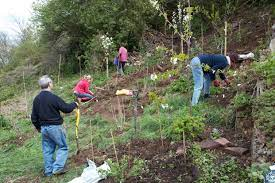
The dimensions of the original area of planting are 9.3 metres by 12.3 metres, giving an area of 114 approximate square meters. The land is 200 metres from the River Avon and about 30 metres in height above it. The river is tidal at this point and the in-surge of seawater twice a day may help in maintaining even temperatures and preventing frost pockets. However the orchard is situated in a deep valley which often holds snow long after it has melted away from surrounding streets. This may help trees like Egremont Russet which require a greater number of ‘chill days’ over the winter, and also in reducing in pests in the orchard. The steep valley provides shelter to the orchard and protection from most strong winds with good sun from mid-morning to late evening.
Prior to the building of the terrace the land had been owned by John Smyth of Ashton Court who leased it to a local farmer John Anjor. It is not known what use was made of the land at this time but being very steep it would have been unsuitable for agriculture. Land on the other side of the road is known to have been paddocks. The area was referred to as Round Hill and may have been grazed by sheep. However, there are a lot of plum trees growing wild on the steep hill behind the orchard and excavations of the area adjacent to the original orchard have revealed paved floors with evidence of walled constructions. It is believed these may have been pigsties.
Historically this area, originally outside of Bristol, was known to have had orchards and the Civil War records from the 1650s refer to the Royalist guns being positioned in the orchards of Bedminster when they attacked Parliamentary Bristol. These could have been cider orchards which are known to have been established in Somerset by this time, but more probably were to provide fruit to sell in the city. By the nineteenth century most farms would have had orchards to provide both fruit and cider for domestic consumption but surplus might be sold. Apples were the dominant fruit because they were easier to store but other fruit including plums were grown particularly in Gloucestershire. Farmers allowed pigs into the orchards after the harvest to consume the fallen fruit and there is some evidence this may help with pest control.
Poole Terrace was pulled down in about 1970 as part of a massive road building scheme devised by Bristol City Council. This road scheme was never built, but not before the area had been devastated. Most housing has been rebuilt but this area had been left, it was very overgrown and had accumulated piles of rubbish. The orchard was established by TRESA, which is a Totterdown residents’ group, with the aim of growing food locally and communally, and also to build on the re-development of community identity after the devastation of the 1970s and 80s.
Walking up the road, above and adjacent to the original orchard are three bays each about 7 metres by 6 metres in area. The 1884 map shows this area has never been built on and there is evidence of what may have been pigsties. Growing out of the wall between two of these bays is a large apple tree which is estimated to be about 50 years old. The community orchard now encompasses these areas with bee hives in the top bay. I have sent samples from the old apple tree to be identified by the Brogdale identification centre who replied that they were of an unknown variety. It seems possible this tree has grown from a seedling. Many such trees produce poor quality fruit but this fruit is a cooking type of apple and very good. This tree aside, all the fruit trees are of modern varieties grafted onto semi-dwarfing root stock. The trees planted include pear, apple, cherry and quince. There are also a number of soft berry bushes: gooseberry, blackcurrant, redcurrant, jostaberry and raspberry. A pond has been created under the big old apple tree where a newt has been seen. Slow worms are regularly seen in the orchard, badgers visit especially when the apples are falling, and foxes make their dens in the steep wooded land behind the orchard. The area has good biodiversity with a range of birds including jays being seen there, and the orchard has a green corridor connecting it to Arnos Vale across the Thunderbolt steps and behind the backs of the houses on the Bath Road.
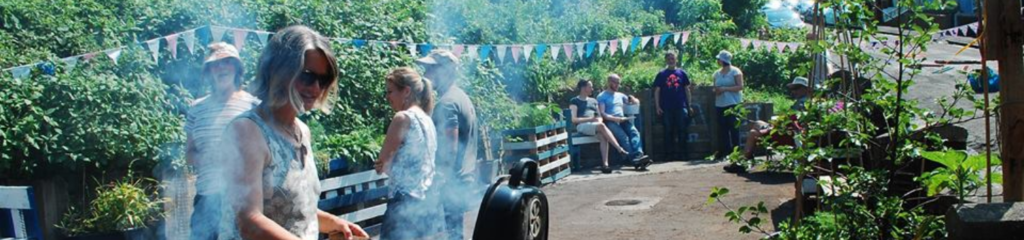
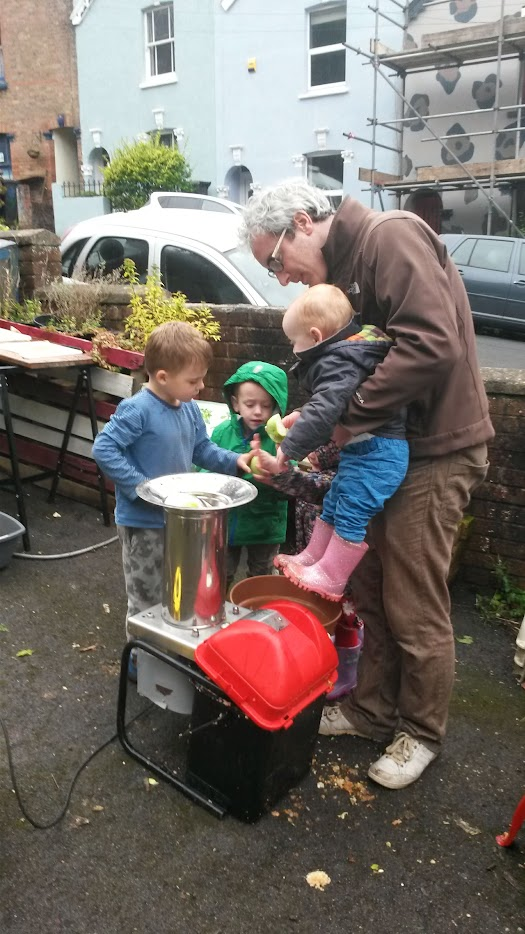
The orchard continues to be managed by the community through the residents organisation TRESAcic, and work parties are organised through a Whatsapp group of interested people. There is usually a Wassail held in early January and an apple pressing event in the autumn. The orchard also features in the Bristol Get Growing Garden Trail and local residents celebrate the orchard at Christmas by placing lights and knitted fruit in the trees.
If you are interested in helping or supporting the orchard please contact Totterdown Sprouting through hello@tresa.org.uk
Anne Silber